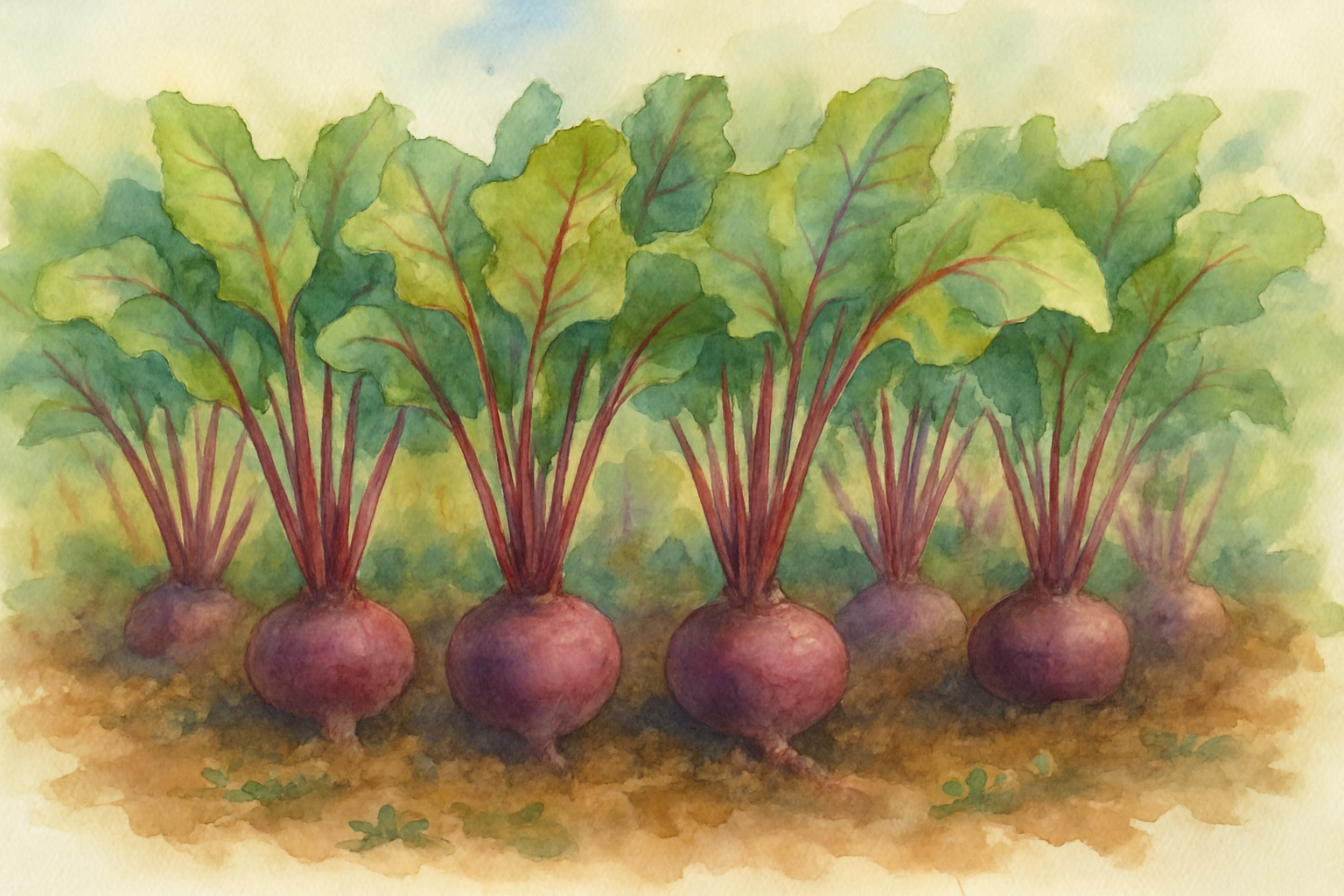
Beetroot is one of the easiest and most rewarding crops to grow — colourful, nutritious, and great for succession sowing. It loves sun, fertile soil, and consistent moisture. You can grow it from March to October, with harvests well into winter.
January
🧤 Plan & Prepare
-
Choose your varieties:
-
‘Boltardy’ – reliable, early, bolt-resistant.
-
‘Chioggia’ – pink and white rings, decorative.
-
‘Golden Detroit’ – mild flavour, golden roots.
-
-
Choose a sunny, open position with well-drained soil.
-
Add compost or well-rotted manure to enrich the soil.
-
Avoid recently manured soil for spring sowings (it causes forked roots).
February
🌱 Soil Preparation
-
Rake beds to a fine tilth.
-
Add general-purpose organic fertiliser (e.g., Growmore).
-
Cover soil with fleece or cloches to warm it for early sowings next month.
-
Check seed supplies and tools are ready.
March
🌿 First Sowings
-
Begin outdoor sowing if the soil is workable and frost is light.
-
Sow 2 cm deep, 10 cm apart, rows 30 cm apart.
-
Protect with fleece in cold areas.
-
Alternatively, sow indoors in modules and plant out later.
-
Water lightly and keep soil evenly moist.
April
🌱 Main Sowing Time
-
Ideal month for reliable germination.
-
Continue sowing every 2–3 weeks for succession.
-
Thin seedlings to 10 cm apart for round roots or 5 cm apart for baby beets.
-
Use thinnings in salads — they’re edible and tasty!
-
Keep beds weed-free and water regularly.
May
☀️ Steady Growth
-
Continue sowing for a staggered harvest until July.
-
Feed lightly with liquid seaweed feed once seedlings are established.
-
Mulch between rows to keep soil moist and reduce weeds.
-
Watch for leaf miner or aphid damage — remove affected leaves.
June
🌾 Rapid Growth
-
Plants grow quickly now — water deeply during dry spells.
-
Thin again if crowded — good airflow prevents mildew.
-
Feed every few weeks with a balanced fertiliser.
-
Harvest early beets when golf-ball sized for the sweetest flavour.
July
🥕 Harvest & Succession
-
Begin regular harvests — pick young roots while tender.
-
Continue sowing final batches early in the month for autumn crops.
-
Water consistently to avoid tough or woody roots.
-
Remove old leaves to prevent disease and promote new growth.
August
🍃 Harvest & Care
-
Keep harvesting — regular picking encourages new growth.
-
Water well in hot weather.
-
Feed lightly to maintain healthy foliage.
-
Start thinking about storing beets — choose firm, unblemished roots for keeping.
September
🍂 Harvest & Store
-
Main harvest month.
-
Lift mature roots gently with a fork — avoid damaging skins.
-
Twist off tops (don’t cut) to prevent bleeding.
-
Store in boxes of damp sand, compost, or sawdust in a cool shed.
-
Leave a few in the ground under fleece for fresh picking into November.
October
🌾 Late Harvests
-
Continue lifting and storing remaining roots before frost.
-
Clear and compost old leaves.
-
Mulch the bed with compost to protect soil for winter.
-
Save a few small roots to force beet leaves (beet greens) indoors over winter.
November
🌱 Soil Care
-
Prepare next year’s beet bed — add compost but avoid fresh manure.
-
Cover soil with cardboard or cloches to keep it workable.
-
Check stored beets regularly — remove any that start to rot.
December
🪴 Rest & Reflect
-
Continue using stored roots for roasting or pickling.
-
Plan crop rotations for next year — avoid sowing beetroot after other root crops.
-
Order new seed varieties for the spring ahead.
🌼 Key Growing Tips
-
Sun: full sun.
-
Soil: fertile, moist but well-drained.
-
Spacing: 10 cm between plants, 30 cm between rows.
-
Watering: deep, consistent watering (don’t let it dry out).
-
Harvest: 8–12 weeks after sowing.
-
Feed: fortnightly liquid feed once established.
🌤 Tip of the Season
“Sow little and often — young, tender beetroot are far sweeter than old giants.”

