
Runner beans are one of the allotment’s great rewards — decorative, high-yielding, and delicious. They need warm soil, rich organic matter, and regular watering.
January
🧤 Plan and prepare
-
Choose varieties: traditional tall types (Rhondda Black, Scarlet Emperor, Enorma) or dwarf patio forms (Hestia).
-
Plan a sunny, sheltered spot — away from strong winds.
-
Start collecting leaf mould or compost to enrich the bed later.
-
Check and repair bean poles or cane supports ready for spring.
February
🌱 Soil preparation
-
Clear the chosen bed and dig in plenty of compost or well-rotted manure.
-
Form a shallow trench (30 cm deep) and fill with kitchen scraps, shredded newspaper, or compost — this will retain moisture later.
-
Cover the trench until planting time to let the soil settle.
March
🌿 Early sowing (indoors)
-
In the second half of the month, sow seeds in pots or root trainers indoors if you have a heated greenhouse or windowsill.
-
Use deep pots (runner beans hate root disturbance).
-
Keep at 15–18 °C; germination takes about a week.
-
Continue improving soil outdoors by adding compost if weather allows.
April
🌱 Sow under cover / prepare supports
-
Keep seedlings growing in good light, hardening off during mild days.
-
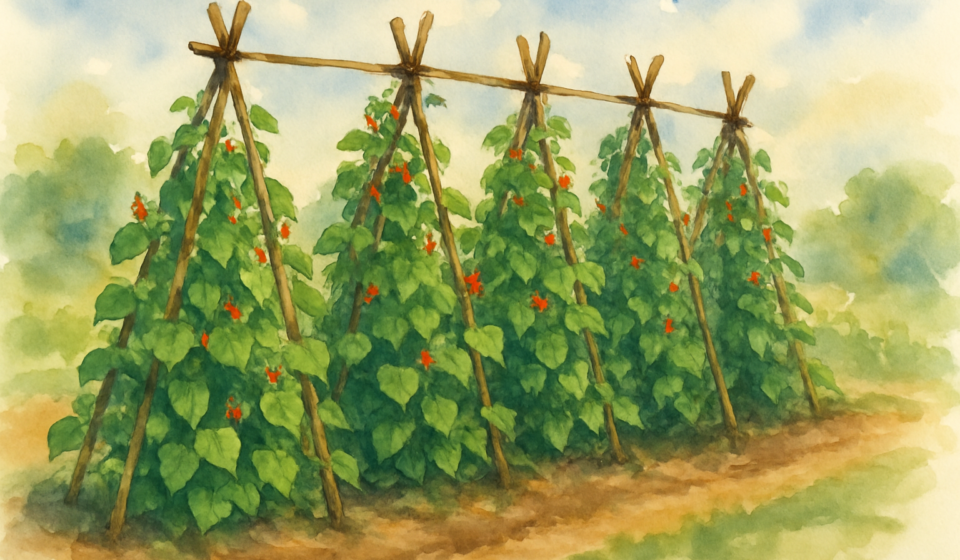
Outside, build your supports:
-
Traditional A-frame: two rows of canes 45 cm apart, tied together at the top.
-
Wigwam: for small spaces.
-
-
Cover the bed with fleece or cloches to warm the soil before transplanting.
-
In mild southern areas, you can direct-sow late in the month under fleece.
May
☀️ Plant out & sow outdoors
-
Main month for sowing.
-
Direct-sow 2 seeds per cane about 5 cm deep once frost risk has passed (usually mid- to late-May).
-
If transplanting indoor-grown plants, harden off for 7–10 days first.
-
Water in well and mulch around plants.
-
Protect from slugs and birds until established.
June
💧 Growth and training
-
Plants will begin climbing fast.
-
Tie shoots to canes until they twine naturally.
-
Water deeply 2–3 times per week in dry spells.
-
Apply organic liquid feed every 10–14 days once flowers appear.
-
Mulch thickly to retain moisture and suppress weeds.
-
Pinch out side shoots on dwarf types to focus energy on pods.
July
🌸 Flowering and first harvests
-
Keep soil consistently moist — dry roots cause flowers to drop.
-
Water in the evening and mist flowers lightly in hot, dry weather to help pollination.
-
Harvest young pods when about 15–20 cm long — every 2–3 days encourages new growth.
-
Feed weekly with tomato feed or comfrey tea.
August
🥕 Peak harvest
-
Pick regularly — don’t let pods get stringy or the plants will stop producing.
-
Keep watering and feeding.
-
Remove any yellowing leaves to improve airflow.
-
Save the best plants for seed: choose healthy vines and leave a few pods to mature fully.
September
🍃 Late harvest & maintenance
-
Continue harvesting while the weather is mild.
-
Remove any dead or diseased leaves.
-
If frost threatens, cover plants with fleece at night.
-
Start drying saved seed pods indoors once mature and leathery.
-
Begin clearing old growth gradually.
https://youtu.be/GmfEAsNx4b0
October
🍂 End of season
-
Final pickings before frost kills the vines.
-
Cut plants at ground level — leave roots in the soil; their nodules release nitrogen.
-
Add old stems and leaves to the compost heap (unless diseased).
-
Spread compost or manure on the bed for next year’s crops.
November–December
🧤 Rest and reflect
-
Clean canes and store them dry.
-
Plan next year’s rotation — avoid re-planting beans in the same spot for at least 3 years.
-
Check stored seed beans; they should be dry and hard before keeping in paper envelopes.
🌼 Key Growing Tips
-
Sun: full sun, sheltered from wind.
-
Soil: rich, moisture-retentive but free-draining.
-
Spacing: one plant per cane, canes 45 cm apart in rows 60 cm apart.
-
Feeding: regular potassium feed once flowering begins.
-
Watering: consistent deep watering, especially during flowering and pod set.
-
Harvest: from July to October.
🌤 Tip of the Season
“Runner beans thrive on kindness — warmth, water, and regular picking.”